

Rubber granules are key products derived from waste tyre repurposing processes, serving as vital link between rubber waste disposal and resource reuse. Unlike raw rubber materials, rubber granules leverage discarded tyres, which are abundant and low-cost, making them ideal for various industrial and civil applications. Production of rubber granules involves multiple rigorous steps including tyre shredding, steel wire separation, rubber crushing, impurity removal and grading. Tyre shredding breaks large discarded tyres into small rubber chunks for subsequent processing; steel wire separation removes metal components embedded in tyres through magnetic separation technology to ensure rubber purity; rubber crushing further reduces rubber chunks into fine particles; impurity removal eliminates residual debris such as fiber and dust; grading classifies particles into different specifications based on application needs. Each step is carefully designed to preserve rubber’s inherent elasticity and wear resistance while forming uniform particles that meet different application standards. Rubber granules’ unique physical properties, such as excellent shock absorption, reliable anti-slip performance and strong corrosion resistance, make them versatile in numerous fields beyond traditional industries.
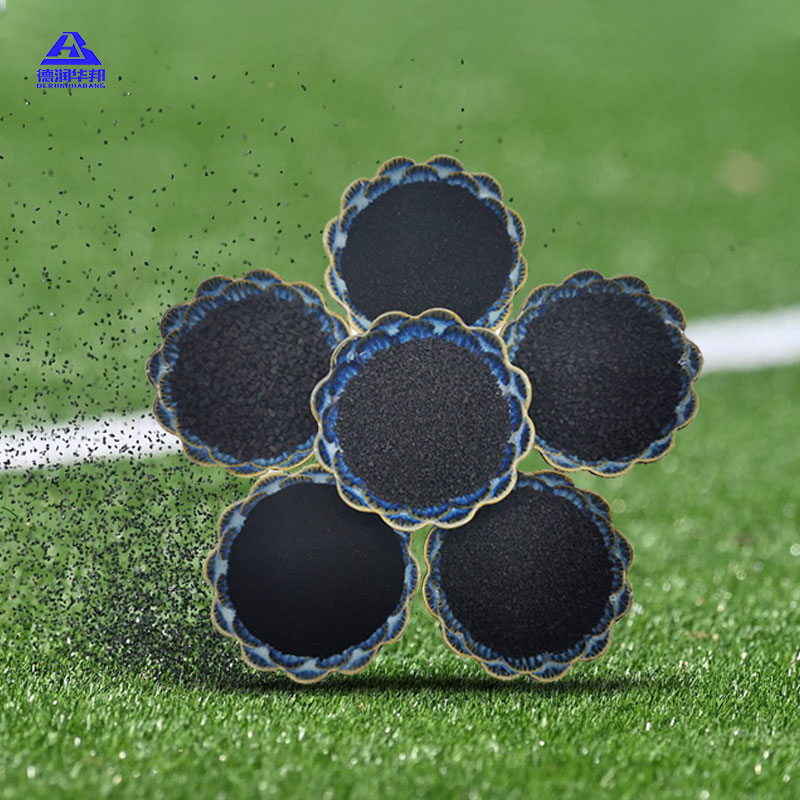
Waste tyre repurposing industry relies heavily on rubber granules as core products, as they effectively reduce environmental pressure caused by tyre landfilling and incineration—two disposal methods that often lead to pollution and resource waste. During repurposing process, rubber granules with different fineness are produced to match diverse needs: fine rubber granules, with small and uniform particle size, are suitable for blending with other materials such as polymers and bitumen to enhance product performance, while coarse rubber granules, with larger particle size and higher hardness, are often used for filling and padding in construction projects. Repurposed rubber granules also show excellent compatibility with polymers, bitumen and concrete, enabling them to be widely used in manufacturing of composite materials and construction of various structures, thus expanding their application scope in construction and manufacturing sectors. Many waste management enterprises focus on optimizing production processes, such as upgrading crushing equipment and improving grading accuracy, to improve rubber granule yield and quality, ensuring that repurposing process is efficient and reliable.
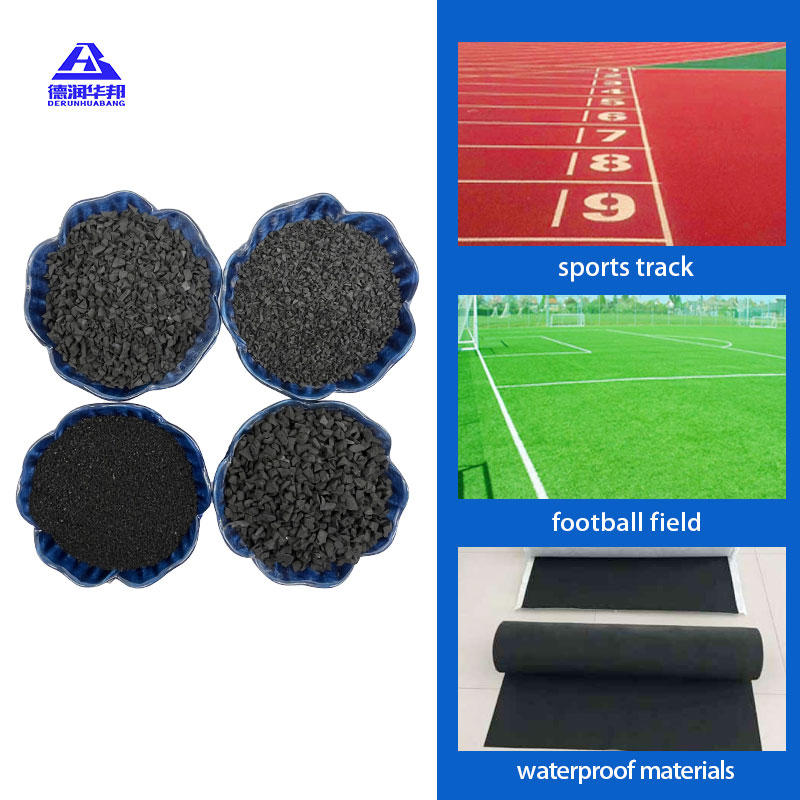
Sports surface renovation is another critical area where rubber granules play irreplaceable role. Old sports grounds and running tracks often suffer from surface wear, cracking and loss of shock absorption due to long-term use and natural erosion, and rubber granules become ideal material for renovation due to their unique properties. When applied to resurfacing running tracks, rubber granules are usually mixed with polyurethane binders to form dense and elastic surface that reduces impact on sports equipment, minimizes wear and tear of equipment, and improves overall safety of venues. In artificial grass renovation for football fields and playgrounds, rubber granules are used as infill material to restore grass fiber uprightness—preventing fibers from being flattened by frequent treading—and enhance surface softness, providing a more comfortable and safe sports experience. Colored rubber granules, which are processed by adding environmentally friendly pigments, are also widely adopted in sports surface renovation. They can be used to create various patterns and color blocks to refresh venue appearance while maintaining excellent weather resistance and UV stability, ensuring that colors do not fade easily under long-term sunlight. Renovation projects using rubber granules often require strict material selection to ensure that rubber granules meet relevant environmental and performance standards, such as low volatility and high wear resistance.
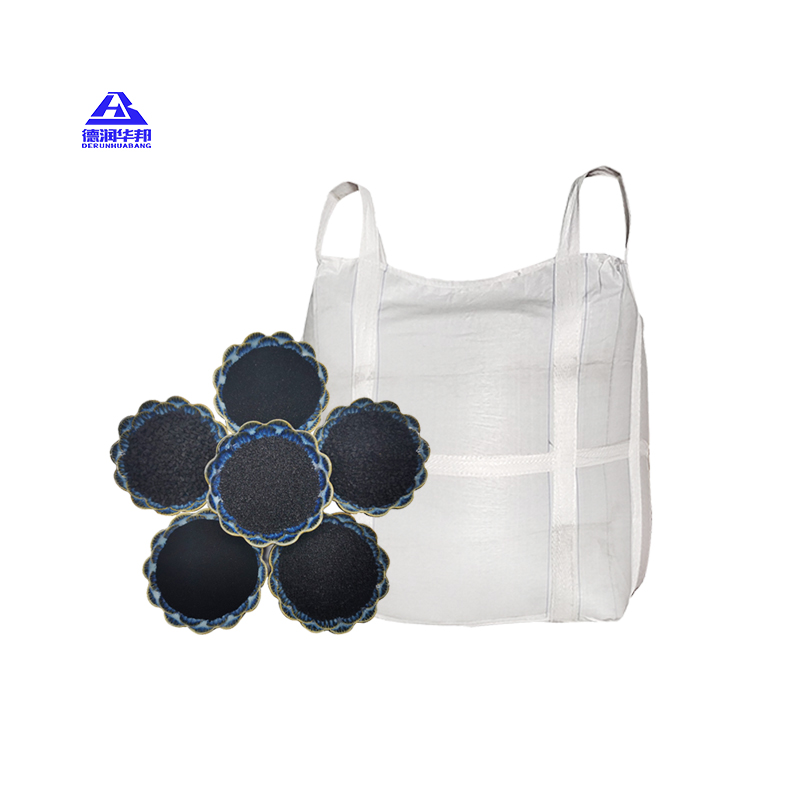
Industrial sector also witnesses growing application of rubber granules, with their properties being fully exploited in various production and operation scenarios. In manufacturing of industrial mats and cushions, rubber granules are blended with synthetic materials such as PVC and EVA to produce products with enhanced shock absorption and noise reduction effects. These products are widely used in factories, warehouses and logistics centers—for example, placed under heavy machinery to reduce vibration and noise, or used as anti-fatigue mats for workers standing for long periods. Rubber granules are also added to waterproof coatings to improve coating flexibility and crack resistance, enabling the coatings to adapt to slight deformation of building structures without cracking, thus extending service life of building waterproof layers. In road maintenance, rubber granules mixed with asphalt are used for pothole repair and surface sealing. The mixture has strong adhesion to the original road surface, can quickly fill potholes and seal cracks, effectively preventing rainwater from seeping into the road base and causing further damage to road surfaces. These industrial applications fully exploit rubber granules’ physical properties, bringing economic benefits to enterprises by reducing maintenance costs and improving operational efficiency while solving practical problems in production and operation.
Different types of rubber granules have distinct characteristics that adapt to specific applications, meeting diverse needs of various industries. Recycled tyre rubber granules, made from discarded tyres, are cost-effective and have good compatibility with most materials, so they are widely used in filling and construction fields such as road base filling and building foundation padding. Synthetic rubber granules such as SBR and EPDM rubber granules, produced through chemical synthesis, have better chemical stability, higher tensile strength and better resistance to aging and oxidation compared with recycled tyre rubber granules. Therefore, they are suitable for high-demand scenarios like professional sports venues—where long-term use and harsh environmental conditions require high material performance—and industrial equipment that needs to resist chemical corrosion. Production process of synthetic rubber granules involves precise material proportioning and strict processing temperature control to ensure consistent particle size and stable performance of the final product. Both recycled and synthetic rubber granules undergo strict quality testing before leaving factory, covering aspects such as particle size distribution, tensile strength, aging resistance and volatile substance content to ensure that they meet application requirements.
Post time: Dec-22-2025