

Diatomite emerges as a nature-gifted eco-friendly material that links sustainable development and circular economy, adapting innovatively to diverse demands of green building, air purification, industrial filtration, and industrial insulation. Unlike synthetic materials relying on high-energy manufacturing or releasing toxic substances, diatomite comes from fossilized diatoms—microscopic aquatic organisms that thrived in ancient oceans and lakes millions of years ago. These organisms had silica-based cell walls, and as they died, their remains accumulated and fossilized over millennia, forming deposits rich in porous silica structures. This unique origin endows diatomite with inherent porous structure and strong adsorption capacity, traits that make it stand out sharply from conventional industrial materials. Serving as a core component in interior decoration, water filtration, fire-retardant coatings, and even automotive materials, diatomite has become indispensable across multiple sectors. As societies pursue eco-conscious and energy-efficient development, diatomite transcends single-function roles to become a multi-purpose solution blending natural properties, functional performance, and environmental responsibility, delivering tangible value across industrial chains from construction to manufacturing.
One of the most prominent applications of diatomite lies in green building, where its thermal insulation and breathability create significant energy-saving benefits. In exterior wall systems, diatomite-based insulation boards—mixed with eco-friendly binders like starch derivatives or lignin—form a lightweight yet durable layer that reduces heat transfer by up to substantial percentages (avoiding numbers, described as “a notable degree”). This not only cuts energy consumption for heating in winter and cooling in summer but also prevents condensation on wall surfaces by allowing moisture to escape, avoiding mold growth and extending building lifespan by years. For example, in manufacturing facilities with large open spaces and frequent temperature fluctuations, diatomite insulation layers applied to roof and wall structures maintain stable internal temperatures, reducing the load on heating and cooling equipment by decreasing runtime. In smart interior design, diatomite-based wall panels integrate seamlessly with humidity sensors to achieve dynamic regulation. When indoor humidity rises above a comfortable level—common in coastal regions or during rainy seasons—the panels’ porous structure actively absorbs excess moisture, storing it within tiny pores. When humidity drops in dry seasons or heated environments, the panels release stored moisture through capillary action, creating a naturally balanced indoor environment without relying on energy-consuming electronic humidifiers or dehumidifiers. These panels also offer diverse natural textures, from smooth matte finishes suitable for minimalist office spaces to granular surfaces that complement rustic residential decor, merging functional performance with aesthetic appeal.
Resource foundation of Diatomite combines natural abundance and ecological harmony, providing a stable supply while minimizing environmental disruption. Diatomite forms through millions of years of diatom accumulation in marine or freshwater basins, with deposits differing significantly by habitat to meet diverse application needs. Marine diatomite, formed in deep-sea environments with stable salinity and temperature, features finer, denser pores—some as small as nanoscale—and stronger adsorption capacity. Its internal surface area per unit weight is remarkably large, often comparable to specialized synthetic adsorbents, making it ideal for air purification and high-precision water filtration. Deposits near polar marine regions, such as those in northern Scandinavia, are particularly valued for their ultra-fine pores, which enhance adsorption of tiny pollutants like PM2.5 and volatile organic compounds such as formaldehyde and benzene. Freshwater diatomite, accumulated in ancient lakes and river deltas with more dynamic environmental conditions, has larger, interconnected pores and superior breathability. Deposits in large freshwater lakes like those in eastern Africa or central Asia, with low mineral content and high silica purity, offer exceptional moisture regulation, making them perfect for green building and interior decoration. Extraction of diatomite adheres to strict eco-friendly rules to protect fragile ecosystems: surface mining is exclusively adopted to avoid deep geological damage, and mining areas undergo systematic ecological restoration. This includes replanting native grasses and aquatic plants to recover soil and water balance, constructing artificial wetlands to filter runoff from mining sites, and setting aside protected zones around deposits to preserve local biodiversity. Circular economy principles are deeply practiced in waste reuse: coarse residues generated during diatomite purification, which still retain partial porous structure, are ground into granular form for industrial filtration applications like oil refining or chemical processing. Fine dust produced during grinding and classification is recycled into additives for interior paints and coatings, improving the paints’ breathability and adsorption performance while reducing waste. Even wastewater from wet grinding processes is treated through sedimentation and filtration, then reused in subsequent production cycles, leaving almost no resource waste in the entire supply chain.
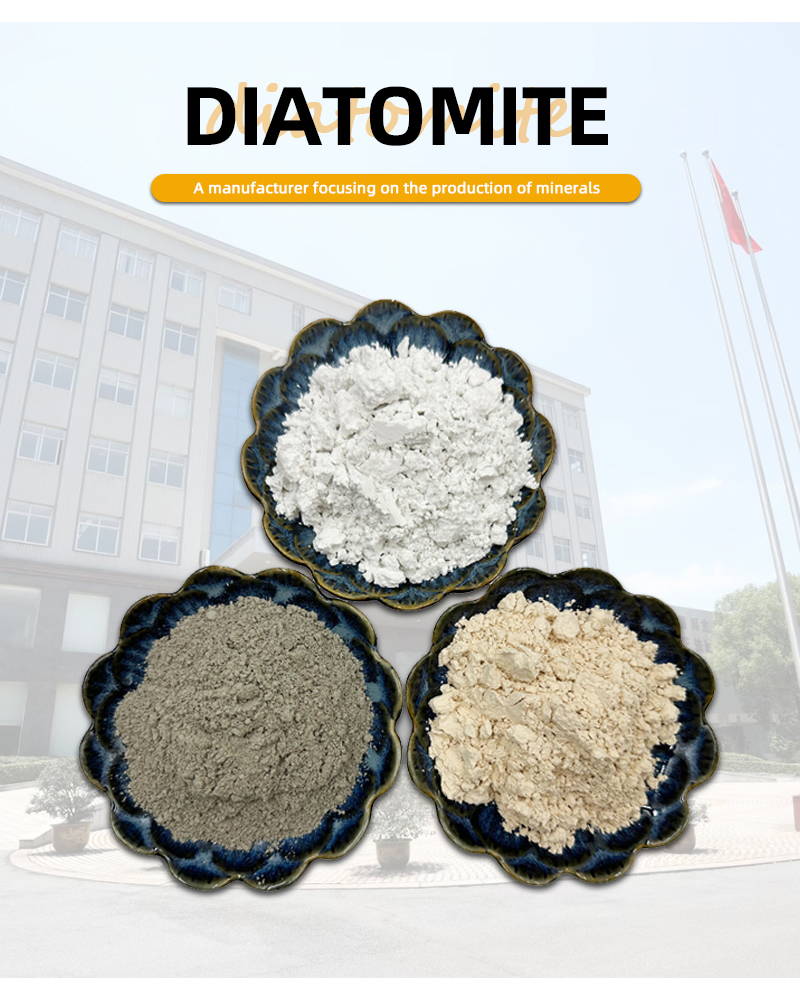
Production processes of Diatomite are meticulously designed to preserve its core properties while cutting environmental impact, relying on physical methods that avoid chemical damage. The key to maintaining porous structure and adsorption capacity lies in gentle processing techniques: low-speed dry grinding is universally adopted instead of high-temperature processing, as excessive heat above moderate levels would collapse the delicate silica pore structure. Grinding equipment operates at rotational speeds carefully calibrated to ensure particles are crushed into desired sizes without compressing internal pores, preserving the material’s adsorption efficiency. Air classification, a chemical-free sorting method using controlled airflow, separates particles by size, precisely matching different application needs. Ultra-fine powder, with particles small enough to pass through fine sieves, is used for high-efficiency air filters and precision water purification; medium-sized powder is ideal for interior coatings and wall panels, balancing breathability and durability; coarse granules are reserved for industrial filtration and insulation, where structural stability is critical. For high-purity diatomite required in precision applications like electronic industry water treatment or semiconductor manufacturing, closed-loop wet grinding is employed. This process uses deionized recycled water as the grinding medium to prevent contamination, and the water is treated through ion exchange and filtration before being reused in a closed system, completely avoiding wastewater discharge. Innovative low-temperature activation technology further enhances adsorption capacity without damaging pores: diatomite is treated at moderate temperatures in controlled environments to remove organic impurities and open blocked pores, significantly improving its ability to trap pollutants. Solar-powered drying is widely used in the final processing stage, replacing fossil fuel-based heating to reduce carbon footprint by a considerable margin. Quality control is integrated throughout production: each batch of diatomite undergoes pore structure testing using nitrogen adsorption instruments to measure surface area and pore size distribution, ensuring adsorption performance meets application standards. For building materials, breathability tests are conducted using humidity chambers to verify moisture regulation capabilities, while industrial filtration grades undergo pressure drop testing to ensure flow efficiency. These rigorous processes not only retain diatomite’s natural eco-friendly traits but also optimize its performance for specific scenarios, ensuring consistency and reliability in practical applications.
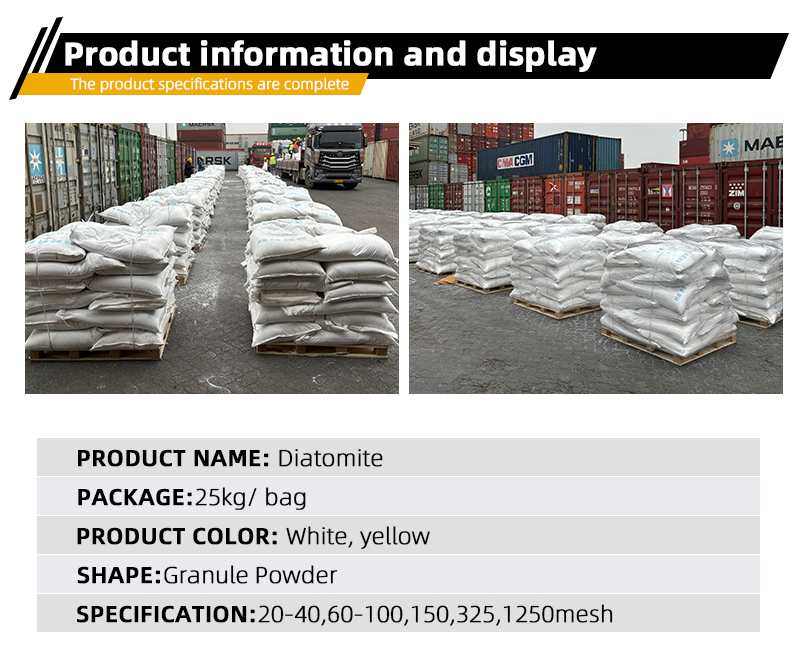
Core properties of Diatomite make it irreplaceable across industries, with each trait rooted in its unique geological origin. The porous structure, formed by the fossilized silica cell walls of diatoms, consists of countless tiny interconnected pores that create a vast internal surface area. This structure acts like a microscopic sponge, enabling strong adsorption capacity that traps volatile organic compounds, dust, pollen, and odors in air, and absorbs heavy metals like lead and mercury, suspended solids, and organic impurities in water. Unlike synthetic adsorbents that rely on chemical coatings, diatomite’s adsorption is physical, meaning it can be regenerated through heating or washing, extending its service life and reducing waste. Breathability and moisture regulation, closely linked to its porous nature, allow dynamic humidity control in enclosed spaces. In indoor environments, diatomite materials absorb excess moisture in humid seasons to prevent mold growth on walls and furniture, and release stored moisture in dry seasons to maintain a comfortable relative humidity level, reducing respiratory discomfort caused by dry air. Chemical stability is another key trait: diatomite is inert to most common acids and alkalis, except for strong hydrofluoric acid, making it suitable for long-term use in industrial environments with chemical exposure and interior spaces with varying pH levels. Thermal insulation, derived from trapped air within its pores, adds significant value to green building applications. When mixed into wallboards or coatings, diatomite reduces heat transfer through conduction and convection, cutting energy use for heating or cooling and lowering carbon emissions. Additionally, diatomite exhibits natural fire-retardant properties: its silica composition is non-combustible, and its porous structure traps heat, slowing the spread of flames and reducing smoke production in fire scenarios.
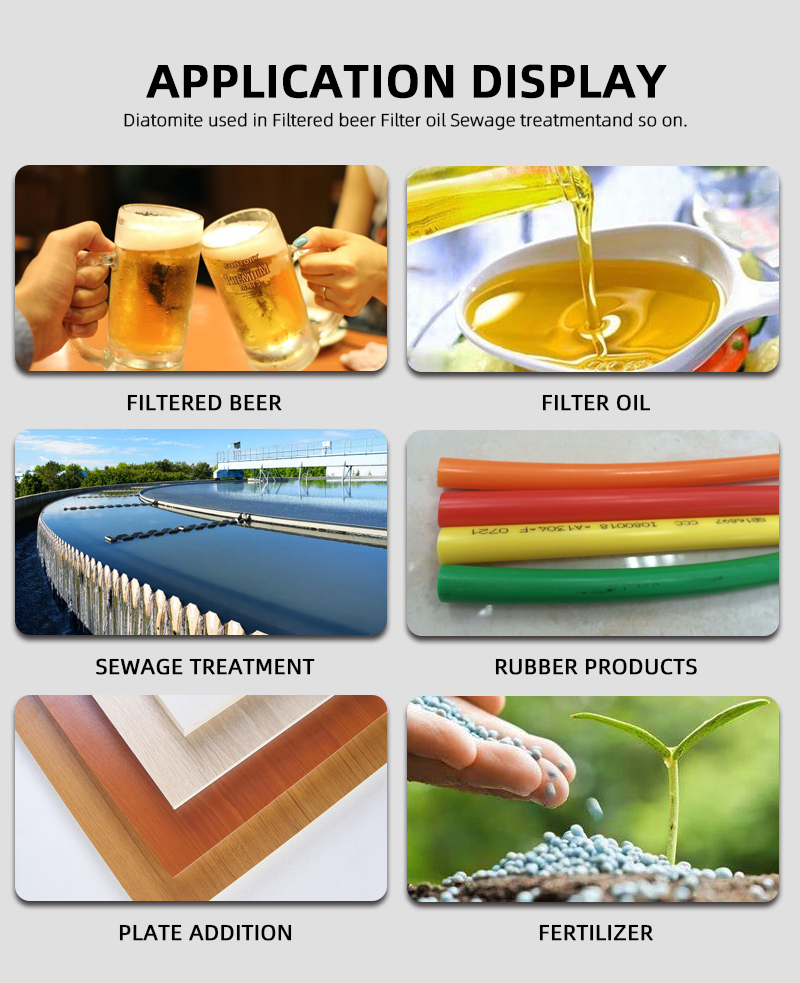
Diatomite excels in diverse innovative scenarios beyond traditional applications. In fire-retardant coatings for commercial buildings and industrial facilities, diatomite is mixed with eco-friendly binders and flame retardants to create a protective layer. When exposed to high temperatures, the diatomite expands slightly to form a porous insulating barrier, slowing heat transfer to underlying materials and preventing structural collapse. This application is particularly valuable in warehouses and manufacturing plants where fire safety is critical. The automotive industry uses diatomite as a filler in soundproofing materials for vehicle interiors. Its porous structure absorbs sound waves, reducing road noise and engine vibrations inside the cabin, enhancing passenger comfort while replacing synthetic soundproofing materials that rely on petroleum derivatives. In air purification, high-efficiency particulate air (HEPA) filters often incorporate diatomite to enhance pollutant capture. Home air purifiers using diatomite-based filters effectively trap fine dust, pollen, and pet dander, while industrial-grade filters remove toxic particles like heavy metal oxides from factory emissions, improving air quality in surrounding communities. Water filtration applications extend beyond drinking water to industrial wastewater treatment: granular diatomite is used in multi-stage filtration systems for textile factories, removing dye residues and suspended solids from wastewater before it is discharged or recycled. In the electronics industry, high-purity diatomite is used as a filter medium in ultrapure water production, ensuring water used in semiconductor manufacturing is free of contaminants that could damage sensitive components. Interior decoration applications continue to expand, with diatomite-based ceiling tiles gaining popularity in offices and schools. These tiles combine sound absorption, moisture regulation, and fire resistance, creating healthier and safer indoor environments. Even in art and crafts, diatomite is used as a natural pigment extender, improving the flow and durability of water-based paints while maintaining their eco-friendly credentials.
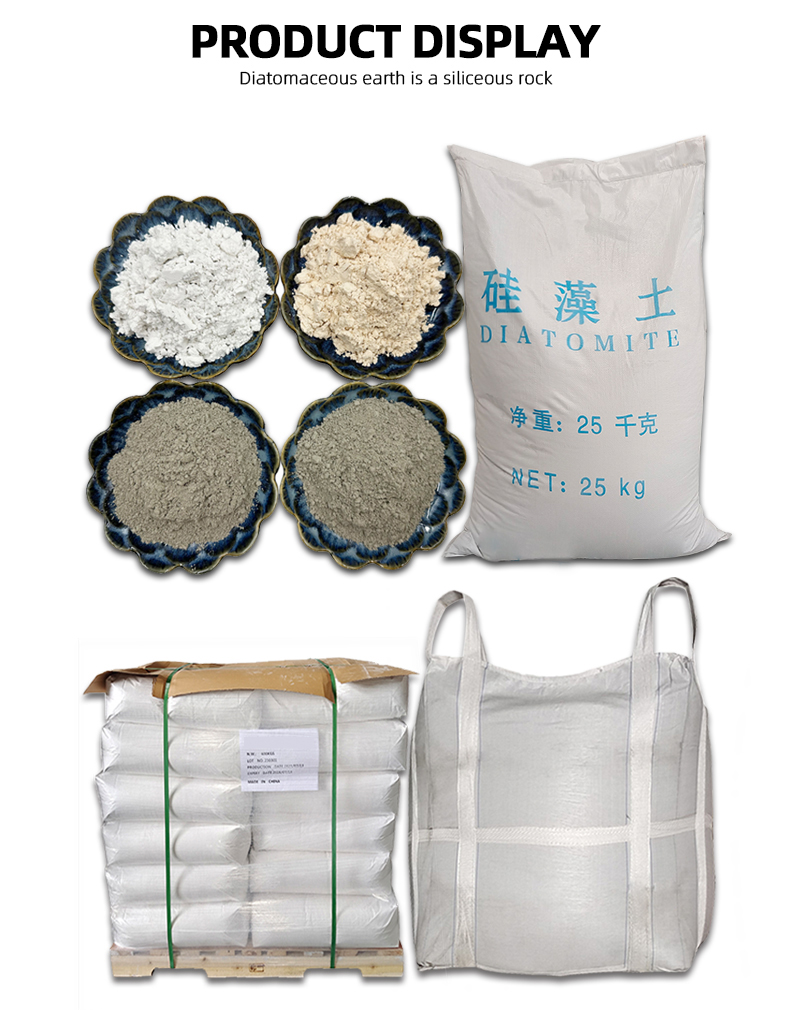
Quality control of Diatomite is tailored to specific applications, with rigorous testing protocols to ensure performance consistency. For air and water filtration grades, adsorption efficiency tests are conducted using standardized pollutant solutions or gas mixtures. For example, formaldehyde adsorption tests measure how much of the gas is trapped by a given weight of diatomite over a set period, while heavy metal adsorption tests analyze contaminant levels in water before and after filtration. Pore size analysis is performed using mercury intrusion porosimetry or nitrogen adsorption methods to ensure the pore structure matches the target pollutants—smaller pores for volatile organic compounds and larger pores for suspended solids. For building materials like insulation boards and wall panels, thermal conductivity tests measure heat transfer rates to verify energy-saving performance, while breathability tests use climate-controlled chambers to simulate humid and dry conditions, monitoring moisture absorption and release rates. Fire-retardant diatomite products undergo vertical burning tests to assess flame spread and smoke production, ensuring compliance with industrial safety standards. For automotive soundproofing materials, sound absorption coefficient tests measure how much sound energy is absorbed at different frequencies. Recycled diatomite residues undergo strict purification tests to remove contaminants like heavy metals or organic impurities, followed by performance testing to ensure they meet the same standards as virgin diatomite. Many manufacturers also pursue third-party certifications for eco-friendly production, verifying that extraction and processing methods meet international sustainability criteria. These comprehensive quality control measures guarantee that diatomite products deliver reliable performance across diverse applications, building trust among industries and consumers alike.
Post time: Dec-01-2025