

In a global manufacturing landscape accelerating toward lightweight, durable, and low-carbon solutions, polypropylene fiber (PP fiber) has emerged as a silent yet indispensable enabler of sustainable innovation across industries. Derived from one of the most widely produced thermoplastics on Earth, this synthetic fiber—characterized by its high tensile strength, chemical resistance, and low density—is no longer merely a commodity material. It is now a engineered cornerstone in green construction, electric mobility, and circular economy systems.
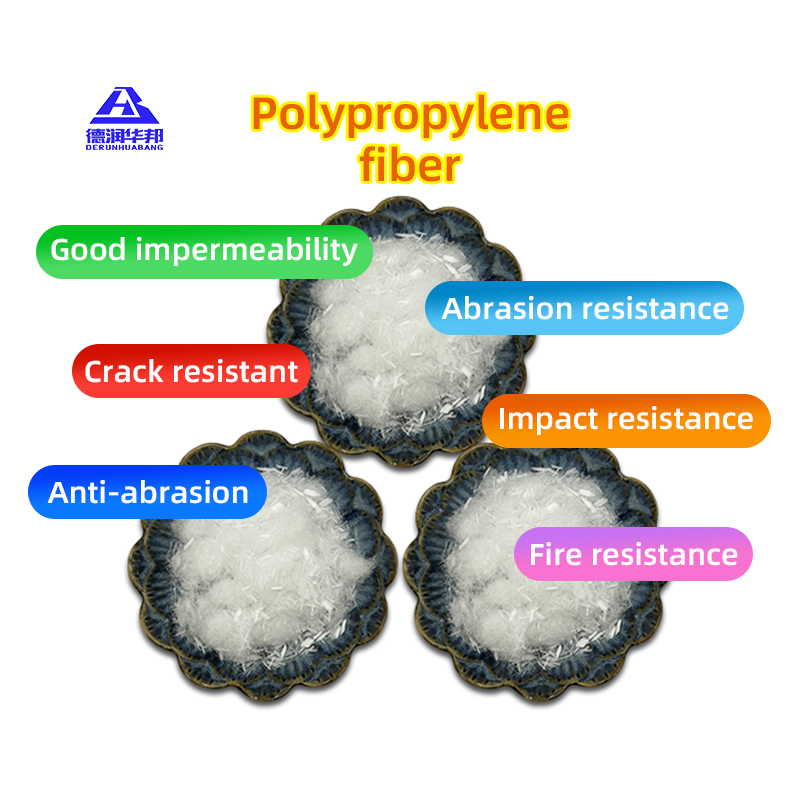
What sets polypropylene fiber apart is its unparalleled versatility in performance enhancement. When integrated into concrete, it forms a three-dimensional micro-reinforcing network that significantly reduces cracking, improves impact resistance, and enhances durability under thermal and seismic stress. In asphalt pavements and shotcrete applications, it minimizes water permeability and extends service life—cutting maintenance costs and carbon emissions over decades. Unlike metal reinforcements, PP fiber is non-corrosive, non-conductive, and requires no protective coatings, making it ideal for marine, industrial, and infrastructure environments.
Beyond structural applications, polypropylene fiber is driving sustainability through advanced material innovation. The rise of bio-based polypropylene, produced from renewable feedstocks like corn-derived propylene, has transformed its environmental profile. With global bio-based PP market value projected to reach $4.41 billion by 2033 (CAGR 18.2%), manufacturers are now offering fibers with up to 100% renewable carbon content, significantly lowering lifecycle emissions. Concurrently, breakthroughs in sheath-core melt-spinning technology enable controlled biodegradability—where a starch-rich sheath degrades under composting conditions while the PP core retains structural integrity during use.
The fiber’s role in medical and hygiene sectors further underscores its societal impact. As the primary component in nonwoven fabrics for surgical gowns, masks, and disposable bedding, PP fiber provides a sterile, breathable, and cost-effective barrier. With OEKO-TEX® STANDARD 100 certification now standard for medical-grade PP textiles, manufacturers ensure zero harmful residues—meeting stringent global safety benchmarks for skin contact and inhalation. Recent innovations include antibacterial-modified PP fibers, embedded with silver-ion or zinc oxide nanoparticles, offering pathogen-resistant surfaces without compromising mechanical properties.
Recent market trends reveal explosive growth in automotive and green building applications. In electric vehicles, long-fiber thermoplastic (LFT) PP composites are replacing metal in seat frames, bumper beams, and underbody shields—reducing vehicle weight by up to 30% while maintaining crash safety. This shift contributes directly to extended EV range and lower energy consumption. In construction, PP fiber-reinforced concrete is now specified in 40% of new infrastructure projects across Europe and North America, driven by building codes mandating crack control and seismic resilience.
Global production is dominated by three regional powerhouses: China, the United States, and Germany. Chinese manufacturers, led by companies like Jinfu Technology (Golden Hope), account for over 40% of global output, leveraging integrated petrochemical chains and advanced spinning technologies. U.S. and European producers—including SABIC, Borealis, and Mitsubishi Chemical—focus on high-value specialty fibers for automotive and medical use, with strong R&D investments in recycled content and carbon-neutral production.
As regulatory frameworks like the EU’s Carbon Border Adjustment Mechanism (CBAM) and global product carbon footprint standards gain traction, polypropylene fiber is evolving from a passive material into an active tool for decarbonization. With scalable recycling pathways, bio-based feedstocks, and performance-enhancing modifications, it is no longer just a fiber—it is a material system redefining sustainability in engineering.
Post time: Apr-01-2026