

Calcium Carbonate Powder is a versatile mineral filler primarily composed of calcium carbonate (CaCO₃), possessing properties such as high whiteness, chemical stability, and cost-effectiveness. The main component of calcium carbonate is CaCO₃ with a crystalline calcite or aragonite structure, while also containing small amounts of impurities such as magnesium, iron, and silicon compounds. Calcium Carbonate Powder’s unique physical and chemical properties have made it an indispensable material in various industries worldwide, with applications spanning plastics, rubber, coatings, construction, and food production.
1. The Formation of Calcium Carbonate: A Geological Miracle Shaped by Nature and Chemistry
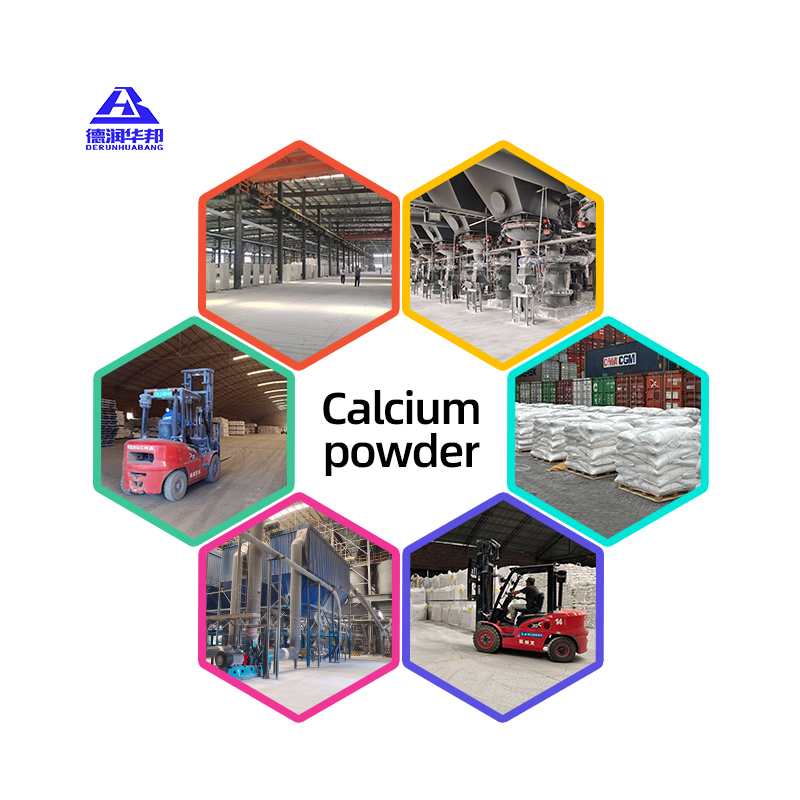
The main component of natural calcium carbonate is formed through geological and biological processes over millions of years. Heavy calcium carbonate (Ground Calcium Carbonate, GCC) originates from sedimentary rocks such as limestone, calcite, and marble, formed by the accumulation of marine organism shells and skeletons on ancient seabeds. Through tectonic processes, these deposits were compacted and crystallized into high-purity mineral formations. Light calcium carbonate (Precipitated Calcium Carbonate, PCC) is manufactured through chemical processes—limestone is calcined to produce calcium oxide, which is then hydrated and carbonated with CO₂ to form ultrafine precipitated particles. During these processes, calcium carbonate develops its characteristic properties—high whiteness, controlled particle size, and versatile functionality, thus laying the foundation for its widespread industrial applications.
Today, high-quality calcium carbonate deposits and production facilities are distributed globally. Major producing areas include China, the United States, Europe, and Japan. In China, major production centers include Lingshan (Hebei Province), Guangxi, and Henan (Nanyang vertical mill powder). These products differ in production methods and specifications (classified as heavy calcium, light calcium, activated calcium, and vertical mill powder), but they all retain the core characteristics of calcium carbonate—excellent whiteness, chemical inertness, and cost-effective filling capacity derived from its abundant natural occurrence and manufacturing versatility.
2. Key Properties of Calcium Carbonate: Why is it so outstanding?
The superior performance of calcium carbonate stems from its unique chemical composition and physical characteristics.
High Whiteness and Brightness: Premium grades achieve whiteness levels of 93-95.8, providing excellent hiding power and aesthetic appeal in paper, coatings, and plastics applications.
Chemical Stability: Calcium carbonate is chemically inert, non-toxic, and environmentally friendly. It is weakly alkaline (pH ~9), stable under normal conditions, and does not readily react with most substances, ensuring safety and reliability in various applications including food contact.
Cost-Effective Volume Filling: As one of the most abundant minerals on Earth, calcium carbonate offers exceptional cost efficiency, reducing raw material costs in plastics, rubber, and coatings while maintaining product performance.
Controlled Particle Size: Available in wide range of particle sizes—from coarse 325 mesh (45 microns) to ultrafine 2500 mesh (5 microns)—enabling precise performance optimization for specific applications.
Acid Solubility: Reacts readily with acids to release CO₂, useful in antacid formulations, soil pH adjustment, and flue gas desulfurization applications.
Enhanced Mechanical Properties: Improves tensile strength, tear resistance, and abrasion resistance in rubber and plastics when properly compounded.
Surface Modification Compatibility: Can be treated with stearic acid, silane coupling agents, or other modifiers to improve dispersion, hydrophobicity, and compatibility with polymer matrices.
These properties work synergistically, making calcium carbonate a widely used material. It can be used as a functional filler, reinforcing agent, pH modifier, or cost reducer to meet the diverse functional needs of various industries.
Calcium carbonate has wide applications and is deeply integrated into all sectors of the national economy, playing an irreplaceable role in manufacturing, construction, agriculture, and food production.
3. The Wide Range of Uses of Calcium Carbonate
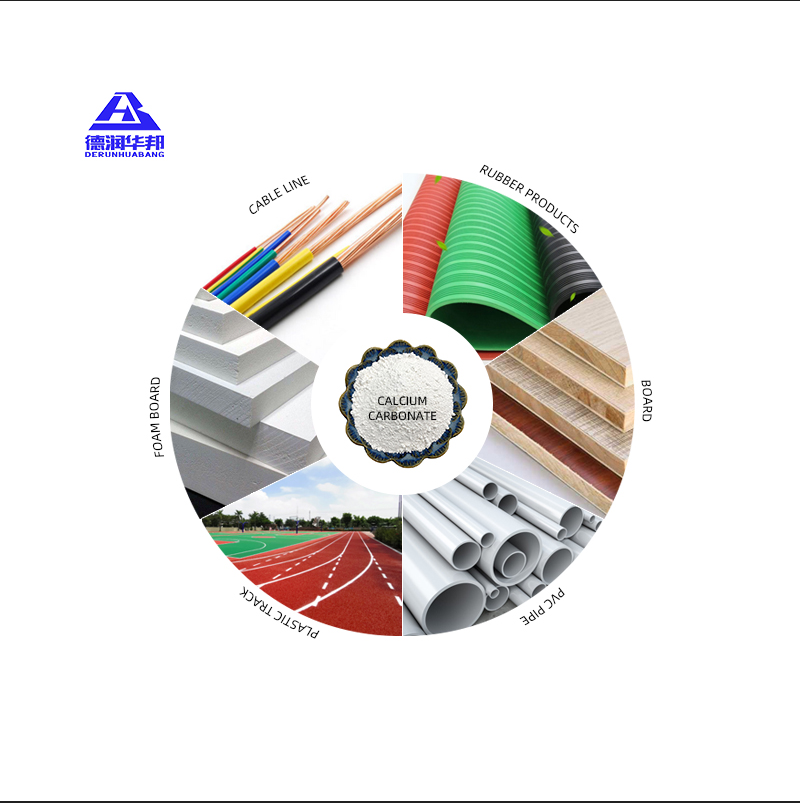
3.1 Plastics and Rubber Industry (Core Applications)
Calcium carbonate’s excellent filling capacity, cost reduction, and mechanical enhancement make it an ideal polymer additive:
Plastic Compounding: Heavy calcium carbonate (325 mesh, 170-400 yuan/ton from Lingshan; 800-1250 mesh, 500-600 yuan/ton) increases product volume, reduces resin costs, and improves dimensional stability, surface smoothness, and processing characteristics in PVC, PP, PE, and other thermoplastics.
Rubber Reinforcement: Improves tensile strength, tear strength, and abrasion resistance in tires, hoses, belts, and molded rubber goods. Light calcium (700-1300 yuan/ton) offers finer particle size for premium applications.
Masterbatch and Color Concentrates: High-purity grades provide excellent dispersion and color consistency in plastic coloring and functional additive concentrates.
Activated Calcium Applications: Surface-modified calcium carbonate (1250-2800 yuan/ton) enhances compatibility with engineering plastics, reducing agglomeration and improving mechanical properties in high-performance composites.
3.2 Coatings, Paints, and Inks
With its core advantages of dispersion stability, opacity, and cost-effectiveness, it has significant value in the coatings field:
Architectural Coatings: Heavy calcium carbonate provides excellent suspension properties, preventing settling while improving brushability and film formation. Does not settle easily and provides good gloss in interior and exterior paints.
Industrial Coatings: Enhances durability, weather resistance, and corrosion protection in protective coatings for metal, wood, and concrete.
Powder Coatings: Provides flow control, edge coverage, and cost reduction in environmentally friendly powder coating systems.
Printing Inks: Improves rheology, transfer properties, and print quality in various ink formulations.
3.3 Construction and Building Materials
Due to its strong bonding properties and fire resistance, it is widely used in construction applications:
Concrete and Mortar: Improves workability, reduces cement content, and enhances long-term durability in ready-mix concrete and dry-mix mortar applications.
Artificial Stone and Tile: Provides body filler, improves whiteness, and enhances fire resistance in artificial marble, granite, and ceramic tile production.
Drywall and Ceiling Panels: Improves strength, surface finish, and fire-rated performance in gypsum board and calcium silicate ceiling products.
Waterproofing Materials: Heavy calcium can substitute for quartz powder in waterproof coatings, providing cost-effective filling without compromising performance.
3.4 Paper and Printing
Due to its excellent brightness and printability, it is widely used in paper manufacturing:
Paper Filler: Increases bulk, opacity, and brightness while reducing wood pulp consumption and production costs in newsprint, copy paper, and packaging grades.
Coating Pigment: Light calcium and ultrafine grades provide superior surface smoothness, print gloss, and ink receptivity in coated fine papers and magazines.
3.5 Food, Agriculture, and Other Industries
Food Grade Applications: Used as a food additive (E170) for calcium fortification, anti-caking agent, and pH regulator in baked goods, beverages, and dietary supplements.
Agricultural Applications: Serves as a soil amendment to neutralize acidic soils, improve nutrient availability, and enhance crop yields. Can substitute for expensive zeolite powder in feed and agricultural applications.
Environmental Applications: Used in flue gas desulfurization (FGD) systems to remove SO₂ emissions from power plants and industrial facilities.
Pharmaceuticals: Active ingredient in antacid formulations and calcium supplements.
Versatile Substitute: Can effectively replace quartz powder, silica sand, wollastonite, talc, washed kaolin, and other white mineral powders in various applications, providing significant cost savings.
4. How to Choose High-Quality Calcium Carbonate?
Calcium carbonate quality varies greatly. Its performance depends on key indicators such as production method, particle size, and purity. The following aspects should be considered when selecting calcium carbonate:
Production Method: Heavy calcium carbonate is produced by mechanical grinding of natural ore, offering cost-effective filling with larger particle sizes (1-45 microns) and lower oil absorption. Light calcium carbonate is chemically precipitated, providing finer particles (0.5-15 microns), higher purity, better whiteness, and higher oil absorption for premium applications.
Particle Size and Fineness: 325 mesh (44 microns) is standard for general filling and construction applications. 800-1250 mesh (10-18 microns) provides improved surface finish in plastics and coatings. 2000-2500 mesh (5-6.5 microns) offers maximum reinforcement and gloss in high-end coatings and plastics. Nanyang vertical mill powder provides uniform particle distribution with specific surface area control.
Purity and Calcium Content: Standard grades contain 90-97% CaCO₃. High-purity grades (98% CaCO₃, 95.8° whiteness) are required for food, pharmaceutical, and premium coating applications. Lower grades are acceptable for construction and general industrial use.
Whiteness and Brightness: Standard Lingshan heavy calcium offers 80-85° whiteness. Premium grades achieve 93-95.8° whiteness for paper coating and high-gloss paints. Specify whiteness requirements based on end-use aesthetics.
Surface Treatment: Activated calcium carbonate is surface-treated with fatty acids or silane coupling agents to improve hydrophobicity, dispersion, and polymer compatibility. Essential for high-performance plastics and rubber applications.
Specialized Grades: Nanyang vertical mill powder offers excellent flowability with added stearic acid, superior foaming characteristics with dispersing agents, and optimal performance in wood-plastic composites (not suitable for stone-plastic composites). Specifications include oil absorption 23-30, CaCO₃ content >97%, HCl insolubles <0.1%, moisture <0.2%, pH 9.
Substitution Strategy: For cost optimization, Lingshan calcium carbonate can effectively substitute for white zeolite powder in feed/agriculture, silica powder in waterproofing, snow-white quartz sand, wollastonite, talc, and washed kaolin in appropriate applications.
Compliance Certification: Select suppliers with ISO9001 or other system certifications; food/pharmaceutical grade products must meet FDA/EC regulations (E170); plastic and rubber grades should comply with relevant material specifications; exported products must meet RoHS, REACH, and international standards.
5. Comparison of Calcium Carbonate with Other Similar Materials
Calcium carbonate, talc, kaolin, and barium sulfate each have their own strengths and applications: Talc offers superior lubricity and is more suitable for applications requiring low friction and soft texture, but it lacks the cost efficiency, acid reactivity, and universal availability of calcium carbonate; Kaolin provides excellent plasticity and is preferred for ceramic and paper applications where workability is critical, while calcium carbonate offers advantages in cost, chemical inertness, and ease of dispersion, making it more effective than kaolin in plastics and general coatings; Barium sulfate provides higher density and X-ray opacity for specialized medical and industrial applications, but calcium carbonate offers better cost efficiency, lower density, and broader regulatory acceptance for food and pharmaceutical uses. Material selection depends on specific needs; in applications requiring cost-effective filling, high brightness, chemical stability, and versatile functionality, calcium carbonate’s advantages are unparalleled.
Conclusion: Calcium Carbonate — A Natural Solution for Modern Development
From supporting affordable plastics and high-quality paper to enhancing construction materials and agricultural productivity, from improving coating performance to providing essential nutrition, calcium carbonate, with its abundant natural origin and multifunctional properties, has become an indispensable material in modern society.
As a professional supplier with abundant mineral resources from Lingshan, Guangxi, and Nanyang regions and advanced processing technology (mechanical grinding, chemical precipitation, surface activation, vertical milling), we can provide customized solutions for plastics, rubber, coatings, construction, paper, food, and other fields. Our products have passed rigorous quality inspections and international compliance certifications, ensuring reliability and stability.
Whether you need cost-effective heavy calcium for volume filling, high-purity light calcium for premium coatings, surface-activated grades for engineering plastics, specialized vertical mill powder for wood-plastic composites, or food-grade calcium for nutritional applications, our team is dedicated to providing you with personalized service and free samples to help you find the most suitable calcium carbonate product. We sincerely look forward to cooperating with you to create a more efficient, economical, and sustainable future!
Post time: Apr-10-2026