

What is Diatomite?
Diatomite is a biogenic siliceous sedimentary rock primarily composed of fossilized remains of ancient diatoms, possessing properties such as high porosity, adsorption, and filtration. The main component of diatomite is amorphous silicon dioxide (SiO₂), typically accounting for over 80% and reaching up to 94%, while also containing small amounts of impurities such as Al₂O₃, Fe₂O₃, CaO, MgO, and organic matter. Diatomite’s unique physical and chemical properties have made it an indispensable material in various industries worldwide, with applications spanning daily life, industrial production, and environmental protection.
1. The Formation of Diatomite: A Geological Miracle Shaped by Ancient Life and Time
The main component of diatomite is the siliceous cell walls (frustules) of ancient diatoms—microscopic algae that lived in oceans, lakes, and other water bodies. During their life cycles, these organisms extracted dissolved silica from water to build their intricate, porous cell walls. When diatoms died, their silica skeletons settled on the bottom of water bodies, accumulating in massive quantities. Under specific temperature, pressure, and geological conditions over millions of years, these deposits underwent compaction and diagenesis, transforming into the soft, chalk-like rock we call diatomite. During this process, the intricate porous structure of diatom frustules was preserved, thus laying the foundation for diatomite’s unique properties.
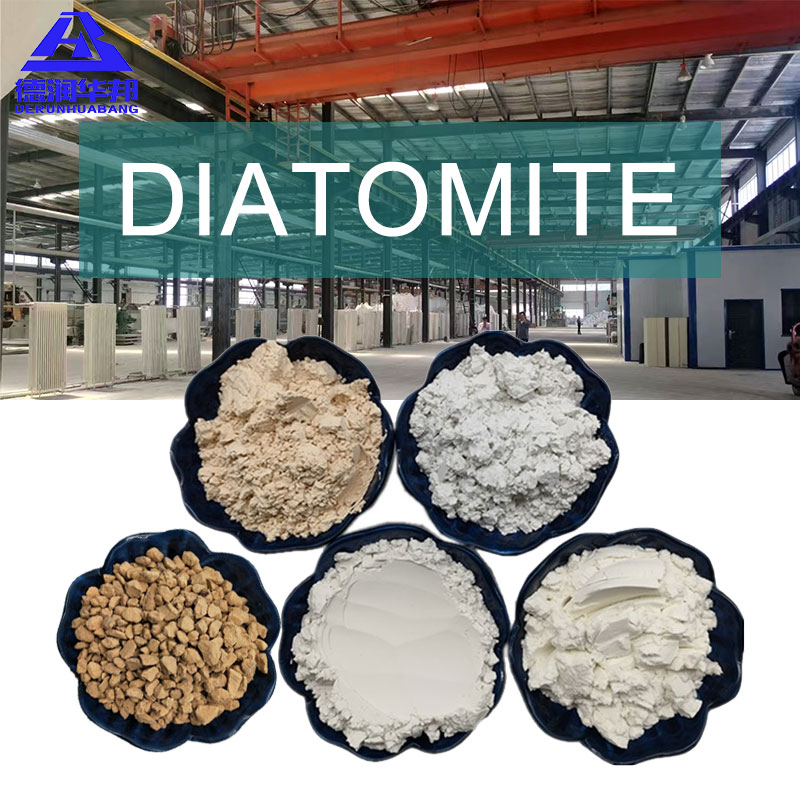
Today, high-quality diatomite deposits are distributed globally. Major producing areas include the United States, China, Denmark, Japan, France, and Mexico. China ranks second globally in diatomite reserves, with major deposits located in Northeast China (Jilin Changbai Mountain), Xinle (Hebei), eastern regions, Panxi (Sichuan), and eastern and southwestern Yunnan. These deposits differ in mineral composition and processing methods (classified as gray raw diatomite, yellow calcined diatomite, and white flux-calcined diatomite), but they all retain the core characteristics of diatomite—excellent porosity and adsorption capacity derived from the intricate structure of fossilized diatoms.
2. Key Properties of Diatomite: Why is it so outstanding?
The superior performance of diatomite stems from the unique microstructure and chemical composition of fossilized diatoms.
High Porosity and Large Surface Area: Diatomite possesses an intricate porous structure with porosity reaching up to 90%, providing a huge specific surface area. This enables exceptional adsorption capacity and filtration efficiency for removing fine particles and impurities.
Adsorption Capacity: The microscopic porous structure of diatom frustules creates countless tiny channels that can strongly adsorb liquids, gases, organic matter, and suspended solids, while effectively retaining moisture and nutrients.
Chemical Stability: Diatomite is chemically stable, resistant to acids (except hydrofluoric acid), non-toxic, odorless, and environmentally friendly. It does not readily react with most substances, ensuring safety and reliability in various applications including food and pharmaceuticals.
Low Density and Thermal Insulation: Diatomite is extremely lightweight (bulk density 0.3-0.5 g/cm³) with low thermal conductivity, making it an excellent insulating material for high-temperature applications.
Permeability and Filtration: The uniform pore size distribution allows precise filtration control, with different grades (300# to 1000#) available for various filtration requirements from coarse to fine.
Abrasion Resistance: Despite its light weight, diatomite has moderate hardness suitable for polishing applications without scratching surfaces.
These properties work synergistically, making diatomite a widely used material. It can be used as a filter aid, adsorbent, filler, carrier, or insulating material to meet the diverse functional needs of various industries.
Diatomite has wide applications and is deeply integrated into all sectors of the national economy, playing an irreplaceable role in industry, environmental protection, and people’s livelihoods.
3. The Wide Range of Uses of Diatomite
3.1 Filtration and Separation (Core Applications)
Diatomite’s excellent porosity, permeability, and adsorption properties make it an ideal filter aid material:
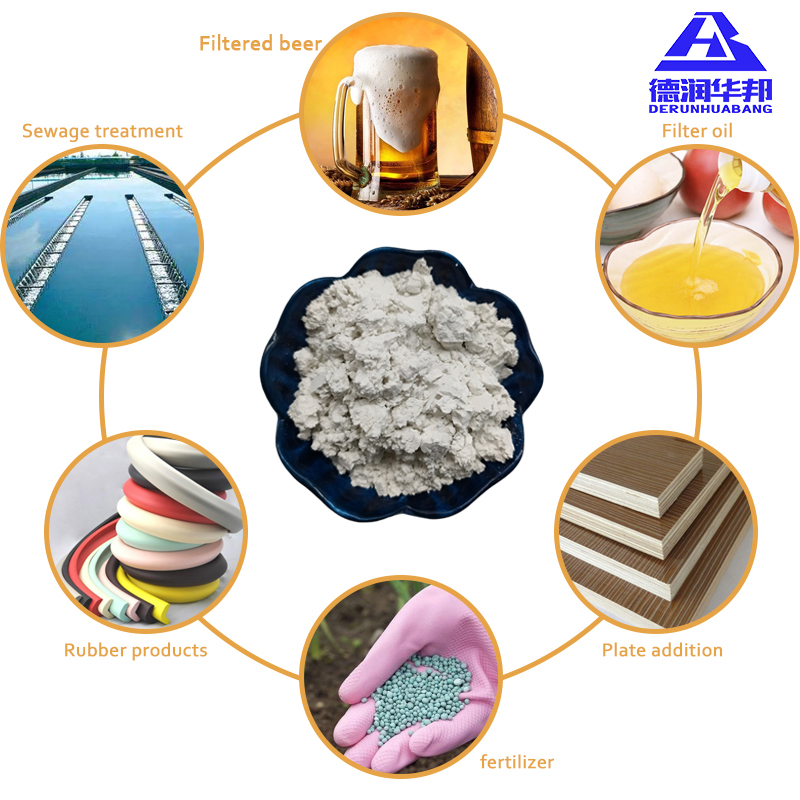
Food and Beverage Filtration: Widely used in beer, wine, fruit juice, edible oil, and sugar syrup clarification. For beer production, diatomite removes yeast, proteins, and other impurities, ensuring crystal-clear appearance and pure taste.
Industrial Liquid Filtration: Essential for filtering lubricants, hydraulic oils, and electroplating solutions, removing mechanical impurities and colloids to extend equipment lifespan and ensure product quality.
Water Treatment: Used in drinking water and wastewater treatment to remove sediment, organic matter, and heavy metal ions, significantly reducing turbidity and improving water quality.
3.2 Environmental Protection and Purification
Diatomite’s strong adsorption capacity makes it a high-quality environmentally friendly material:
Air Purification: Used in air filtration systems and as an additive in interior wall coatings (diatom mud), it adsorbs formaldehyde and other harmful gases while regulating humidity through its “breathing” effect—absorbing moisture when humid and releasing it when dry.
Waste Gas Treatment: Adsorbs harmful gases such as hydrogen sulfide from industrial emissions and can be used in automotive exhaust purification systems.
Oil and Chemical Spill Cleanup: Its high oil absorption capacity makes it effective for cleaning up oil spills and chemical leaks.
3.3 Building Materials and Construction
With its core advantages of lightweight, thermal insulation, and fire resistance, it has significant value in the construction field:
Thermal Insulation Materials: Manufactured into diatomite insulating bricks, boards, and pipes for building walls and industrial equipment, providing excellent heat retention due to low thermal conductivity.
Diatom Mud Coatings: A popular interior wall coating that adsorbs formaldehyde, regulates humidity, prevents mold, and provides fire resistance, creating healthier living environments.
Lightweight Concrete: Added to concrete formulations to reduce building weight while improving thermal and acoustic insulation properties.
Agricultural Substrate: Beige granules (1-3mm, 3-6mm, 6-9mm) used for horticultural planting media, improving soil aeration and water retention.
3.4 Agriculture and Animal Husbandry
Due to its strong adsorption and non-toxicity, it is widely used in agriculture and animal husbandry:
Soil Amendment: Added to clay soils to improve aeration and drainage; enhances water and nutrient retention in sandy soils, promoting healthy root development and crop growth.
Pesticide and Fertilizer Carrier: Serves as a carrier for insecticides, fungicides, and fertilizers, enabling controlled release of active ingredients and improving utilization efficiency.
Feed Additive: Added to poultry and aquaculture feeds to adsorb mycotoxins, promote digestion through its porous structure, and improve animal health.
Insecticide Applications: Used directly as a mechanical insecticide or in mosquito coils and seed coatings, with 325 mesh white or gray grades being optimal.
3.5 Other Industries
Rubber and Plastic Filler: Incorporated into tires, rubber products, and plastics to enhance strength, abrasion resistance, and heat resistance while reducing production costs.
Paper Manufacturing: Used as a filler and coating material to improve paper whiteness, smoothness, and ink absorption, reducing pulp consumption.
Polishing and Abrasives: Its fine, moderate-hardness particles make excellent polishing powders for metals, glass, and stone surfaces.
Cosmetics and Personal Care: Added to facial masks, cleansers, and exfoliating products to absorb excess oil, remove dirt, and eliminate dead skin cells.
Catalyst Carrier: Its chemical stability and large surface area make it an ideal support for catalysts in chemical processes.
4. How to Choose High-Quality Diatomite?
Diatomite quality varies greatly. Its performance depends on key indicators such as origin, processing method, and particle size. The following aspects should be considered when selecting diatomite:
Processing Method: Flux-calcined white diatomite (highest purity, 78-85 whiteness) is suitable for food, pharmaceutical, and high-end cosmetic applications. Yellow calcined diatomite offers good cost-performance for general filtration and soil amendment. Gray raw diatomite (un calcined) is ideal for agricultural and construction applications requiring natural properties.
Permeability Grade: For filtration applications, select appropriate permeability numbers—325 mesh for fine filtration (swimming pools, beverages), 500# for general oil filtration (most commonly used), 700#-1000# for viscous liquids (syrup, chemical solutions), and 300# for sewage treatment.
Particle Size: Finer particles (325 mesh, 600 mesh) provide larger surface area for coatings and rubber applications. Coarser grades (20-60 mesh, 100 mesh) are suitable for abrasives, hand washing sand, and agricultural substrates.
Purity and Color: Higher whiteness indicates higher purity and better performance. Food-grade products should meet GB 14936-2012 standards; industrial applications follow GB/T24265-2014.
Physical Properties: Quality products should be lightweight (approximately 2.5 cubic meters per ton for standard grades), fluffy, and free from excessive impurities or black spots.
Compliance Certification: Select suppliers with ISO9001 or other system certifications; food/pharmaceutical grade products must have safety certifications, and exported products must comply with international standards such as RoHS and REACH.
5. Comparison of Diatomite with Other Similar Materials
Diatomite, bentonite, perlite, and activated carbon each have their own strengths and applications: Bentonite has excellent swelling and cation exchange capacity, making it more suitable for drilling mud and waterproofing applications, but it lacks the precise pore structure and lightweight characteristics of diatomite; Perlite offers good thermal insulation and lightweight properties, while diatomite has advantages in filtration precision, adsorption capacity, and chemical stability, making it more effective than perlite in food and beverage filtration and air purification; Activated carbon provides superior adsorption for organic compounds and odors, but diatomite offers better filtration efficiency, lower cost, and thermal insulation properties, making it more suitable for large-scale industrial filtration and building materials. Material selection depends on specific needs; in applications requiring high porosity, precise filtration, lightweight insulation, and environmental safety, diatomite’s advantages are unparalleled.
Conclusion: Diatomite — A Natural Solution for Modern Development
From supporting clean water and healthy food production to protecting environmental quality, from enhancing agricultural productivity to improving quality of life, diatomite, with its natural biological origin and multifunctional properties, has become an indispensable material in modern society.
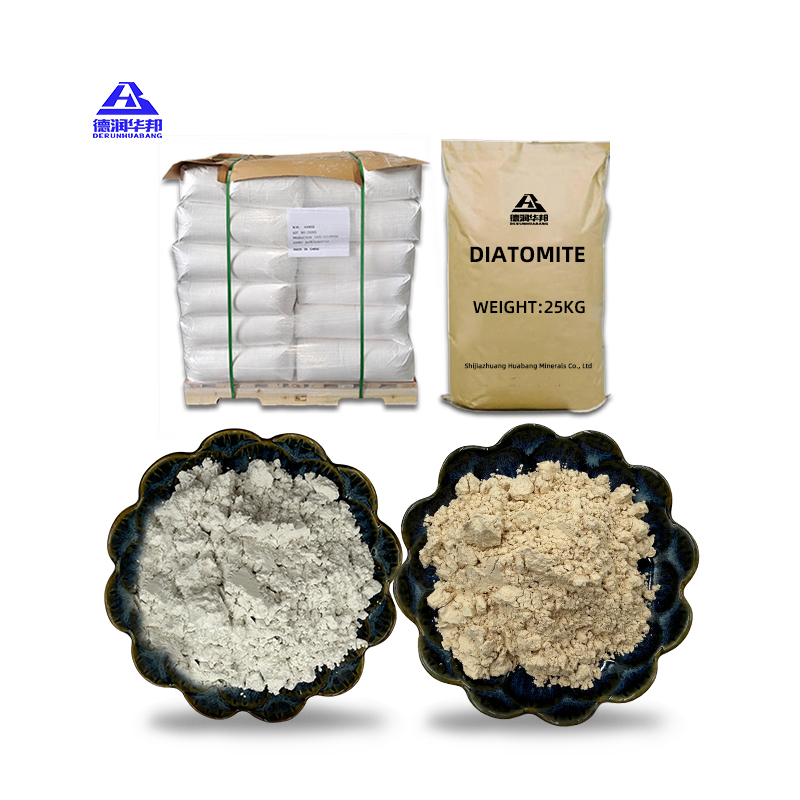
As a professional supplier with abundant mineral resources and advanced processing technology, we can provide customized solutions for filtration, environmental protection, construction, agriculture, and other fields. Our products have passed rigorous quality inspections and international compliance certifications, ensuring reliability and stability.
Whether you need food-grade filter aids, industrial adsorbents, building insulation materials, or agricultural substrates, our team is dedicated to providing you with personalized service and free samples to help you find the most suitable diatomite product. We sincerely look forward to cooperating with you to create a more efficient, environmentally friendly, and sustainable future!
Post time: Mar-23-2026