

Epoxy flooring has become a top choice for industrial, commercial, and residential spaces due to its durability, seamless finish, and easy maintenance. At the core of high-quality epoxy floor systems are two critical components: two-component AB epoxy adhesive and epoxy flooring mica flakes, which together enhance bonding strength, wear resistance, safety, and visual appeal. This article details their applications and standard usage methods to help contractors and property owners achieve professional, long-lasting results.
AB epoxy glue, composed of resin (Part A) and hardener (Part B), acts as the foundational binder for epoxy flooring systems. It delivers exceptional adhesion to concrete, metal, and stone, forming a rigid, chemical-resistant layer that resists oil, stains, and heavy impact. Widely used in primers, base coats, and repair mortars, AB glue ensures the entire flooring system bonds tightly to the substrate, preventing peeling, cracking, or delamination even in high-traffic areas such as warehouses, workshops, garages, and commercial kitchens. Its fast-curing formula shortens construction cycles while maintaining stable performance across varying temperatures and humidity levels.
The standard application process for AB epoxy glue begins with thorough surface preparation: clean, dry, and degrease the substrate, repairing cracks and leveling uneven areas with epoxy patching compound. Follow the manufacturer’s specified mixing ratio (commonly 1:1 or 2:1) and stir slowly for 2–3 minutes, scraping the container’s sides and bottom to ensure complete homogeneity. Apply the mixed adhesive evenly using a roller or squeegee, working within the product’s pot life to avoid premature thickening. Allow sufficient curing time—usually 12–24 hours for light foot traffic and 48–72 hours for full strength—before proceeding to subsequent layers.
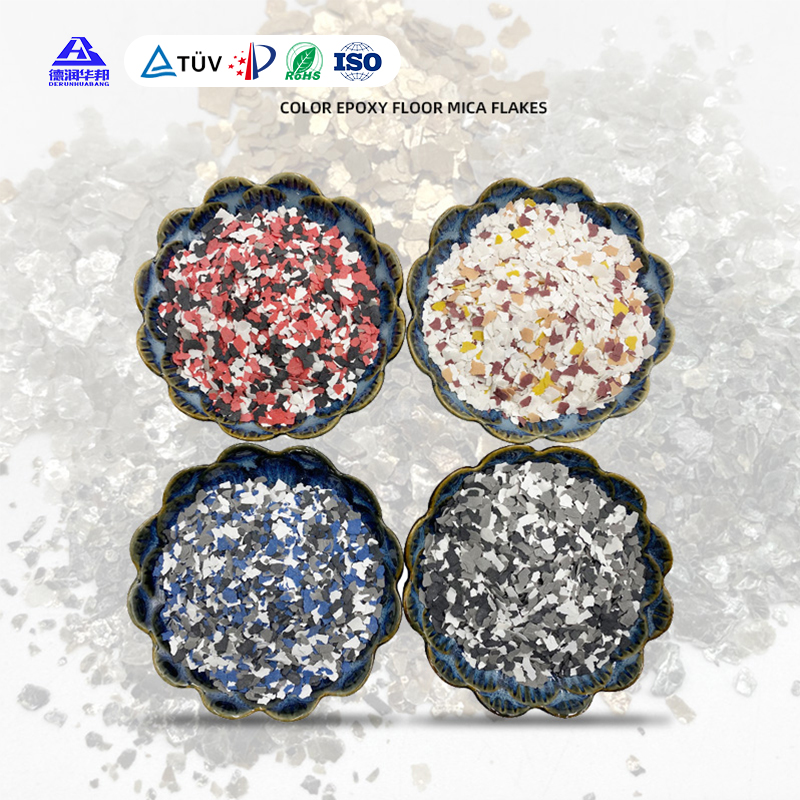
Mica flakes, natural mineral additives with shimmering texture and excellent stability, are embedded in wet epoxy base coats to upgrade both function and design. They create a subtle textured surface that significantly improves slip resistance, making floors safer in wet or greasy environments. Mica flakes also hide minor surface imperfections, boost light reflection, and offer customizable color and particle-size options to achieve elegant, natural stone-like aesthetics. Additionally, they enhance scratch resistance and UV stability, extending the floor’s service life and preserving its appearance for years.
For mica flake installation, broadcast the flakes evenly over the still-tacky AB epoxy base coat within 10–20 minutes of application, ensuring uniform coverage without clumping. After the base coat fully cures, remove excess loose flakes and apply a clear epoxy top coat to seal the system, locking in the flakes for a smooth, glossy, and durable finish. This layered structure combines the strong bonding of AB glue with the decorative and protective advantages of mica flakes, resulting in a high-performance floor that balances beauty and resilience.
Industry experts note that the combination of AB epoxy glue and mica flakes meets the growing demand for flooring solutions that are both functional and visually pleasing. Proper material selection, precise mixing, and standardized application are key to maximizing performance. As epoxy flooring continues to evolve, these two materials remain essential for creating safe, durable, and attractive floors in modern construction and renovation projects.
Post time: May-07-2026