

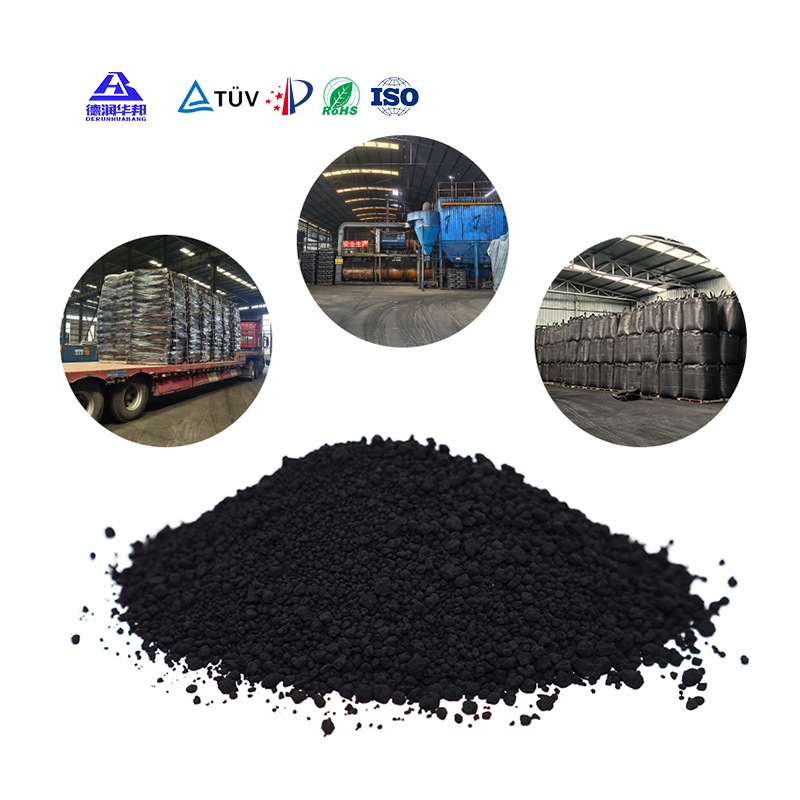
Meticulous Craftsmanship: Two Production Paths Ensure Controllable and Traceable Quality
Purified and processed from natural carbon mineral raw materials through crushing, grinding and impurity removal, retaining natural pigment characteristics with economical cost. It is suitable for general scenarios with high cost-effectiveness requirements, such as ordinary building material coloring and low-grade engineering coloring.
Employing precise processes such as oil furnace method, gas furnace method and thermal cracking production. Raw materials can adopt industrial waste oil and carbon-containing waste materials to realize “waste-to-treasure” transformation, aligning with green production trends. The synthesized products feature high purity, uniform particle size and stable blackness consistency, meeting the stringent requirements of high-end coatings, plastic products and environmental-friendly material applications.
Core Features: Six Major Advantages Underpin “Abundant Value”
Free of heavy metals, complies with EU REACH, RoHS and Chinese national standards, suitable for children’s toys, daily plastic products, coating materials and related application fields.
Extremely strong UV resistance, never fade or chalk after years of outdoor use. It adapts to high-temperature and rainy environments, serving as a permanent colorant for building exteriors and outdoor infrastructure.
Outstanding alkali resistance, perfectly compatible with cement and lime systems; stable to weak acids, able to withstand industrial chemical corrosion, making it the first choice for anti-corrosion coating coloring.
A small dosage can achieve perfect black coloring, effectively covering the base material color, reducing raw material consumption and maximizing cost-effectiveness.
Fine powder texture, easy to disperse in water-based and solvent-based systems, suitable for various processing techniques such as coatings, concrete coloring, plastics and rubber mixing.
Reputable manufacturers adopt the ISO 9001 quality management system, ensuring consistent blackness and performance in each batch, avoiding production losses caused by color difference and unstable quality.
Empowering All Industries: From Basic Building Materials to High-End Manufacturing, Covering All Sectors
- Colored concrete, floor tiles, roof tiles: matched with black and gray tones, sun and rain resistant, keeping the original color for years.
- Interior and exterior wall coatings, putty: environmentally friendly coloring with rich layers, not easy to crack after construction.
- Roads and infrastructure: colored asphalt, traffic markings, wear-resistant and anti-aging, improving road recognition and safety.
- Pipes, toys, cables, rubber products: high temperature resistant, stable color, compliant with environmental protection standards, suitable for daily plastic and rubber products.
- Automotive paints and industrial coatings: used as primary colorant to improve coating durability.
- Shipbuilding, bridges, and steel structures: core coloring raw materials for anti-corrosion coatings, resisting sea wind and moisture erosion and extending service life.
Post time: May-20-2026