

Amid tightening global environmental regulations, the rapid expansion of circular economy models and the continuous iteration of advanced industrial technologies, functional microporous minerals have emerged as core enablers driving cross-industry transformation. Among them, zeolites, a distinctive family of hydrated aluminosilicate minerals with intricate three-dimensional cage-like crystal structures, have transcended the boundaries of traditional mineral materials. Dubbed “Nature’s Molecular Sieves” for their precise molecular screening capability, zeolites stand out for their powerful ion exchange, selective adsorption and catalytic properties. They are not merely conventional industrial raw materials but a bridge connecting geological heritage, environmental governance, chemical engineering and cutting-edge technology. From municipal wastewater treatment and industrial flue gas purification to petrochemical catalysis, agricultural optimization and biomedical development, zeolites deliver irreplaceable value in pollution reduction, resource recycling, energy conservation and technological breakthroughs, becoming a cornerstone material for the world’s pursuit of sustainable development and high-quality industrial progress.
The extraordinary performance of zeolites originates from their unique microscopic crystal architecture and flexible material tunability. Formed over millions of years via the alteration of volcanic tuffs in saline and alkaline geological environments, natural zeolites feature interconnected micropores and cavities across their honeycomb-like lattice framework. This special structure endows them with ultra-large specific surface area, reversible dehydration and rehydration capacity, as well as outstanding cation exchange capacity. Clinoptilolite, chabazite and mordenite are the most widely exploited natural zeolite varieties in commercial applications, boasting natural purity and stable physical and chemical properties. In addition to natural ores, artificially synthesized zeolites including Zeolite A, Zeolite Y and ZSM-5 can be precisely customized in terms of pore size, silicon-aluminum ratio and surface activity through controlled chemical synthesis. This tailor-made characteristic allows synthetic zeolites to meet the rigorous demands of high-end industrial scenarios that natural minerals cannot cover.
In terms of inherent physical and chemical traits, zeolites exhibit excellent thermal stability, corrosion resistance and mechanical durability. They can maintain stable performance under extreme high temperature, strong acid, strong alkali and high-pressure working conditions. Meanwhile, all natural and mainstream synthetic zeolites are non-toxic, harmless and free of radioactive substances, fully complying with global safety and environmental standards. With the advancement of modern mineral processing and material modification technologies, raw zeolite ores can be processed through crushing, screening, purification, activation, ion modification and composite compounding. Activated zeolites show a 30% to 50% improvement in adsorption efficiency, while modified products with adjusted surface acidity achieve targeted catalytic effects. The whole processing chain of modern zeolite production adheres to green manufacturing concepts: closed-loop material circulation realizes near-zero solid waste discharge, low-temperature activation technology cuts energy consumption significantly, and the regenerable feature of zeolites extends their service life dramatically. After adsorption saturation or catalytic failure, most zeolite products can be regenerated through high-temperature desorption, water washing or chemical activation and put back into use, which greatly reduces industrial waste output and aligns closely with the global circular economy development philosophy.
Driven by their multi-dimensional performance advantages, zeolites have built a diversified application ecosystem covering environmental protection, traditional industry, agriculture, petrochemical engineering, biomedicine and emerging high-tech fields, showing strong penetration across multiple sectors.
Environmental protection and ecological remediation are the most mature and largest application scenarios for zeolites. Relying on superior ion exchange and selective adsorption capabilities, zeolites have become a star material for global water and air purification. In municipal sewage treatment and industrial wastewater treatment, zeolite filters can efficiently capture ammonia nitrogen, heavy metal ions such as lead, cadmium and mercury, as well as residual organic pollutants in water bodies, effectively lowering pollutant concentrations to meet discharge standards. Unlike traditional chemical treatment agents, zeolite purification produces no secondary pollution and can be recycled multiple times, greatly reducing the operating cost of sewage treatment plants. In the field of air governance, zeolites serve as high-efficiency adsorbents for industrial flue gas, volatile organic compounds (VOCs), formaldehyde and peculiar smell. They are widely installed in industrial waste gas treatment equipment, indoor air purifiers and vehicle air filtration systems. In soil remediation projects, zeolites can solidify harmful heavy metal elements in contaminated soil, optimize soil aggregate structure, retain water and fertilizer, and restore the ecological vitality of degraded land. Moreover, zeolites are also applied to the treatment of radioactive waste, relying on stable lattice structure to solidify radioactive nuclides, providing a safe solution for nuclear waste disposal.
In traditional industrial and daily chemical industries, zeolites act as efficient functional additives and core catalysts, promoting industrial upgrading and green transformation. The petrochemical sector is the largest consumer of high-end synthetic zeolites. Zeolite-based catalysts are indispensable core materials for fluid catalytic cracking, hydrocracking and reforming reactions in petroleum refining. They can improve the conversion rate of crude oil, increase the yield of high-value light oil products, and reduce energy consumption and carbon emissions during the refining process. In the detergent industry, Zeolite A has become an ideal environmentally friendly substitute for phosphate builders. It softens water through ion exchange, enhances the decontamination effect of detergents, and fundamentally eliminates the eutrophication problem of water bodies caused by phosphorus emissions, leading the global daily chemical industry to move toward phosphorus-free and green production. In construction and building materials, zeolites are mixed into cement, concrete and fireproof materials. Their microporous structure can improve the thermal insulation, sound insulation and fire resistance of building products, while enhancing the durability and anti-cracking performance of concrete. In addition, zeolites are also used in the drying and dehumidification of industrial production lines, gas dehydration and separation, creating stable production conditions for food, electronics, chemical and other industries.
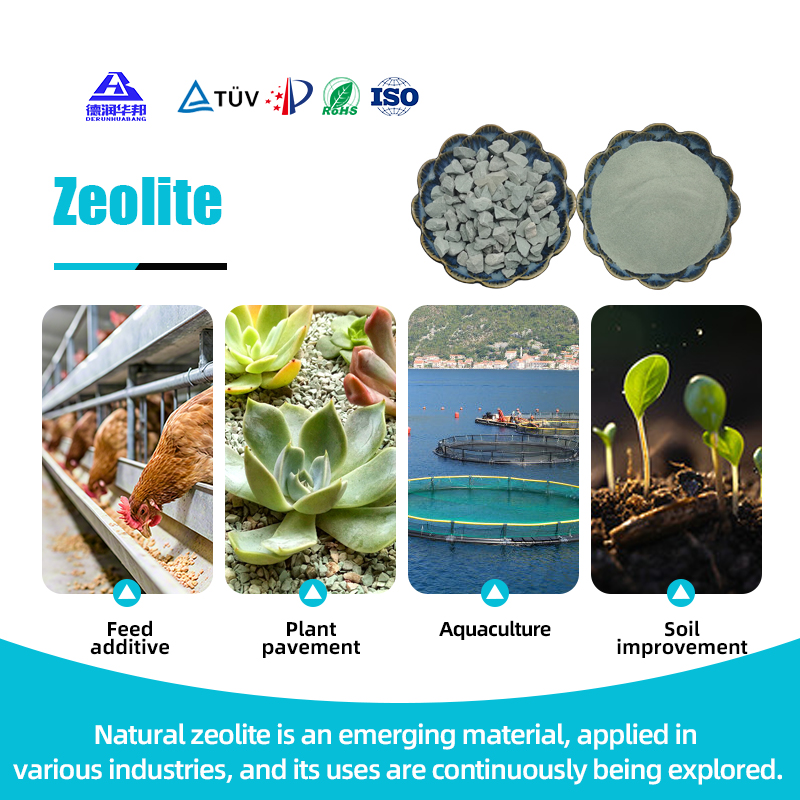
Agriculture and aquaculture are emerging growth tracks for zeolite applications. In agricultural production, zeolites are processed into soil conditioners and slow-release fertilizer carriers. They can absorb excess fertilizer components in the soil, realize slow release of nutrients, improve fertilizer utilization rate, and reduce the environmental pollution caused by fertilizer leaching. At the same time, zeolites can adjust soil pH value, improve the growth environment of crop roots, and increase crop yield and quality. In livestock and poultry breeding and aquaculture industries, adding zeolite powder to feed can absorb harmful toxins in animal intestines, enhance disease resistance of livestock, and reduce the emission of peculiar smell in breeding farms. In aquaculture water bodies, zeolites continuously adsorb ammonia nitrogen and nitrite, purify water quality, reduce the incidence of aquatic organisms, and help the healthy development of ecological aquaculture.
With the breakthrough of material modification technology, zeolites are gradually stepping into high-end manufacturing, biomedicine and emerging technology fields, releasing new development potential. In the biomedical industry, biocompatible modified zeolites are applied to wound dressings, detoxification preparations and controlled-release drug carriers. Their microporous structure can slowly release drugs, extend the drug action time, and meanwhile absorb exudates and harmful bacteria on wound surfaces to accelerate wound healing. In the field of new energy and electronic manufacturing, ultra-fine modified zeolites are used as functional fillers for electronic components and new energy battery auxiliary materials. They improve the heat dissipation performance and structural stability of products, and adapt to the high-standard requirements of electronic devices for precision and safety. In the field of gas separation, zeolite molecular sieves are used for industrial oxygen production, nitrogen production and natural gas purification, realizing efficient separation of different gas molecules with energy-saving and high-efficiency advantages. From daily life to cutting-edge science and technology, zeolites are expanding their application boundaries and becoming a universal functional material supporting the development of multiple emerging industries.
Currently, the global zeolite industry is in a stage of simultaneous upgrading of resource development, processing technology and market structure, presenting a pattern of coordinated development of natural zeolites and synthetic zeolites. Natural zeolites are dominated by bulk low-end applications such as water treatment, construction and agriculture due to their cost advantages, while high-value-added synthetic zeolites occupy the high-end markets of petrochemical catalysis, fine chemical industry and biomedicine, accounting for about 67% of the global market share by volume in 2025. Driven by technological innovation, the zeolite processing industry is evolving towards high purification, fine modification, intelligence and energy conservation. Advanced technologies such as precise ore sorting, low-energy activation, directional ion modification and continuous synthesis have been widely promoted. These technologies not only improve the purity and performance stability of zeolite products, but also cut comprehensive energy consumption and carbon emissions in the production process. At present, the global natural zeolite reserves are widely distributed, and the Asia-Pacific region has become the fastest-growing market for zeolites, with China, India and other countries driving regional market expansion relying on the growth of environmental protection policies, petrochemical industries and agricultural modernization.
China boasts abundant zeolite mineral resources and a complete industrial chain, playing an important role in the global zeolite market layout. Zeolite deposits in China are widely distributed with rich reserves and complete varieties. After years of development, China has formed a whole industrial chain integrating ore mining, primary processing, deep modification, synthetic zeolite R&D and production, and terminal application. Domestic zeolite products cover full-range specifications from low-grade raw ore powder to high-purity ultra-fine modified products and customized synthetic zeolites. While meeting the huge domestic market demand for environmental governance, industrial upgrading and agricultural development, Chinese zeolite products are also exported to dozens of countries and regions around the world by virtue of stable quality and cost-effective performance. At the same time, domestic R&D institutions and enterprises are accelerating the research and development of high-end zeolite materials, continuously breaking through technical bottlenecks in high-performance catalysts, biomedical zeolites and special molecular sieves, promoting the import substitution of high-end products, and further enhancing the independent controllability and global competitiveness of the industrial chain.
Looking at the global market prospects, driven by three major driving forces: increasingly stringent environmental protection policies, the vigorous development of circular economy and the continuous innovation of industrial technologies, the zeolite industry maintains a steady growth momentum. Data shows that the global zeolite market size reached approximately USD 14.5 billion in 2025. It is projected to grow at a compound annual growth rate of 5.0% from 2025 to 2035, and will exceed USD 23.6 billion by 2035. Among them, the market demand for high-end modified zeolites and special synthetic zeolites in petrochemical catalysis, biomedical treatment and high-end environmental protection fields will grow more rapidly, becoming the core growth engine of the industry.
From ancient volcanic minerals to modern molecular sieves, from simple raw ore utilization to high-end customized functional materials, zeolites have witnessed the evolution of human industrial civilization with their unique properties. They not only provide economical and efficient solutions for global environmental pollution control and resource recycling, but also inject continuous power for the technological progress of petrochemical, biomedicine, new energy and other industries. In the future, as the global pursuit of green, low-carbon and sustainable development deepens, and new material technologies continue to make breakthroughs, zeolites, the timeless “molecular sieves” from nature, will further explore application boundaries, release greater industrial value, and become an indispensable key material for building a cleaner, more efficient and smarter modern industrial system.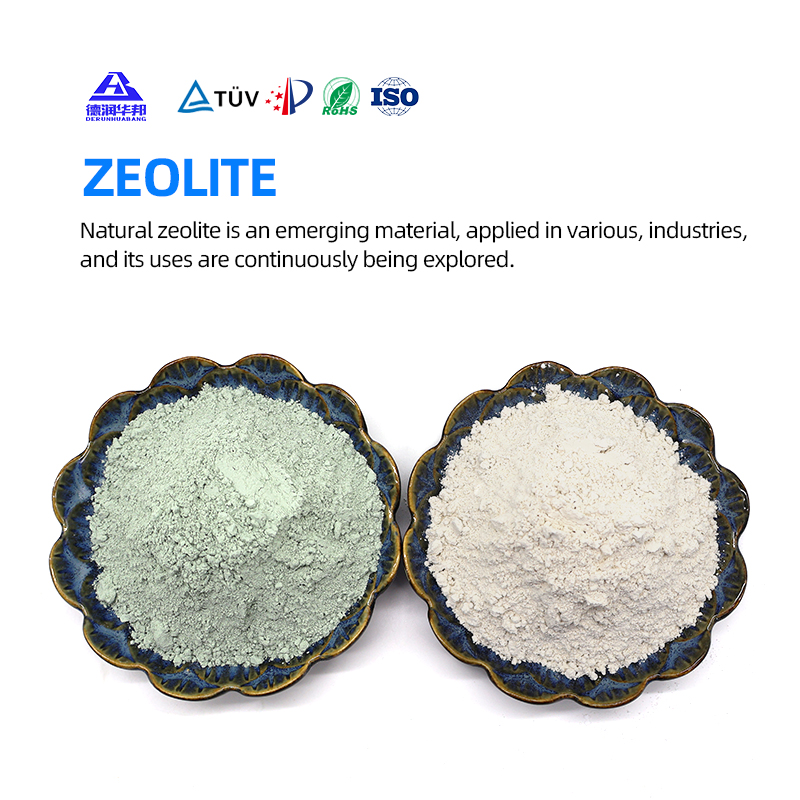
Post time: Jun-08-2026