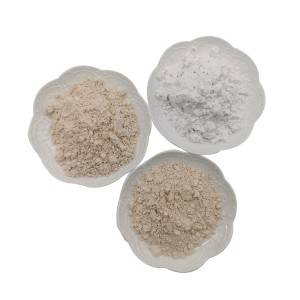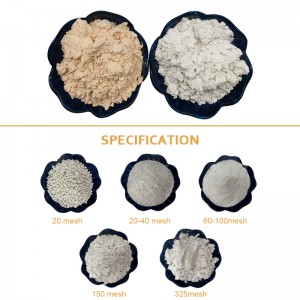


Diatomite for sustainable development architectural decoration air purification water treatment eco friendly production porous structure adsorption capacity industrial applications interior finishes
Short Description:
Diatomite emerges as a unique eco-friendly material that links sustainable development and circular economy, adapting flexibly to diverse demands of architectural decoration, air purification, and water treatment. Unlike synthetic materials relying on high-energy production or releasing harmful substances, diatomite originates from fossilized aquatic organisms, carrying inherent porous structure and adsorption capacity. These traits elevate it beyond common industrial materials, making it a core component in interior finishes, industrial filtration, and environmental governance. As societies prioritize eco-conscious living, diatomite transcends single-function roles to become a multi-purpose solution blending nature, functionality, and environmental protection.
Resource foundation of Diatomite combines natural abundance and ecological compatibility. Diatomite forms from accumulated fossilized diatoms—microscopic aquatic organisms—over millions of years, with deposits categorized by origin: marine sedimentary diatomite has finer porous structure and stronger adsorption capacity, ideal for air purification and water treatment; freshwater sedimentary diatomite features larger pores and better breathability, suitable for architectural decoration. Extraction of diatomite follows strict eco-friendly protocols: surface mining avoids deep geological disturbance, and mined areas are restored with native vegetation to recover ecological balance. Diatomite processing also embraces circular economy by reusing waste from initial purification—coarse residues are ground into granular form for industrial filtration, minimizing resource waste.
Production processes of Diatomite focus on preserving core properties and reducing environmental impact. Processing relies on physical methods to maintain porous structure and adsorption capacity: dry grinding with low-energy equipment replaces high-temperature treatment, ensuring pore integrity; air classification separates particles by size without chemical additives, matching different application needs. Wet processing for high-purity diatomite uses recycled water in closed-loop systems, avoiding wastewater discharge. Eco friendly production is further enhanced by using solar power for drying and capturing dust emissions via cyclone separators. These processes avoid harmful chemicals, keeping diatomite’s natural eco-friendly traits intact.
Core properties of Diatomite make it indispensable across industries. Porous structure—with countless tiny pores per unit volume—enables strong adsorption capacity: it effectively traps volatile organic compounds and dust in air, and absorbs impurities in water. Breathability allows moisture regulation: in interior finishes, it absorbs excess humidity and releases it when air is dry, maintaining comfortable indoor environments. Chemical stability ensures durability: it resists corrosion from common substances, suitable for long-term use in industrial and architectural scenarios. Thermal insulation adds value to building materials: mixed into coatings or wallboards, it reduces heat transfer, lowering energy consumption.
Diatomite excels in diverse application scenarios, with its porous structure and adsorption capacity unlocking unique value in each field. Architectural decoration and interior finishes stand out as key application areas that fully leverage its breathability and adsorption capacity: diatomite-based wall coatings, mixed with eco-friendly binders, not only purify indoor air by actively trapping volatile organic compounds, dust particles, and even subtle odors from daily life but also regulate humidity dynamically—absorbing excess moisture during rainy seasons to prevent wall condensation and mold growth, and releasing stored moisture when indoor air turns dry, maintaining a comfortable and healthy living environment. Beyond coatings, decorative panels blended with diatomite offer rich natural textures, ranging from fine sand-like smoothness to granular coarseness, which can be matched with different interior styles such as minimalist, rustic, or natural; these panels also retain diatomite’s breathability, avoiding stuffiness in enclosed spaces. Diatomite is also used in interior putty and floor materials, adding eco-friendly attributes while enhancing surface durability. Water treatment fully taps into diatomite’s strong adsorption capacity and porous filtration performance: in industrial wastewater treatment, granular diatomite filters serve as core filtration layers, effectively removing suspended solids, colloidal particles, heavy metal ions, and organic impurities from wastewater generated by manufacturing, printing, and dyeing industries, reducing pollutant content before water discharge or recycling. In drinking water purification, food-grade diatomite (processed through strict purification) acts as a pre-filtration medium, capturing sediment and micro-impurities without altering water’s natural mineral composition, laying a solid foundation for subsequent deep purification. Compared with synthetic filtration materials, diatomite filters have longer service life and are easier to regenerate, aligning with circular economy principles. Air purification applies diatomite’s adsorption capacity in various scenarios: in home and office environments, diatomite-based air filters—integrated into air purifiers or fresh air systems—capture dust, pollen, and pet dander, while adsorbing formaldehyde and benzene released from furniture and decorations. In public spaces like shopping malls and schools, large-sized diatomite filter modules handle higher air volumes, maintaining consistent air quality. Even in automotive air conditioning systems, diatomite-infused filters effectively trap road dust and exhaust particles, improving in-car air environment. Industrial applications of diatomite extend beyond basic filtration: in oil refining, diatomite serves as a filter aid to remove impurities from crude oil and lubricating oil, enhancing product clarity and stability; in fire-retardant materials, diatomite’s porous structure absorbs fire-retardant agents, forming a synergistic effect that slows down combustion and reduces smoke emission, making it suitable for building insulation boards and industrial fireproof coatings. It also acts as a filler in coatings and rubbers, improving product weather resistance and wear resistance while reducing the use of synthetic fillers. Cultural crafts have embraced diatomite’s unique texture and natural properties: artists mix diatomite with water-based paints to create textured artworks, where diatomite’s granularity adds three-dimensional layers to paintings, and its breathability prevents paint cracking over time. Craftsmen also mold pure diatomite or diatomite-clay mixtures into small decorative items such as vases, candle holders, and wall hangings—these items not only showcase natural earthy hues but also regulate humidity in small spaces like bedrooms or study rooms, blending artistic value with practical functionality.
Quality control of Diatomite is tailored to specific applications. For air and water treatment, adsorption capacity tests measure ability to trap pollutants and impurities; pore size distribution is analyzed to ensure matching filtration needs. For architectural materials, breathability tests verify moisture regulation performance; durability tests check resistance to wear and humidity. For industrial filtration, particle size uniformity and chemical stability are key indicators. Recycled diatomite residues undergo strict purification tests to ensure they meet industrial standards. These measures guarantee diatomite’s performance across different scenarios.

Write your message here and send it to us