Iron oxide pigments stand as versatile eco-friendly materials that link sustainable living and circular economy, adapting innovatively to diverse demands of green construction, architectural coatings, and interior decoration. Unlike synthetic pigments relying on toxic chemical synthesis or emitting harmful byproducts, iron oxide pigments originate from natural iron ore deposits or eco-friendly synthetic processes. This unique origin endows them with inherent color stability and exceptional weather resistance, traits that distinguish them from conventional coloring materials. Serving as core component in industrial coloring, concrete staining, and architectural finishes, iron oxide pigments transcend single-function roles to become multi-purpose solutions blending natural properties, functional performance, and environmental responsibility.
Resource foundation of iron oxide pigments combines natural abundance and ecological harmony. Natural iron oxide pigments are extracted from iron ore deposits rich in hematite and goethite, distributed across diverse geological zones. Synthetic iron oxide pigments are produced via controlled chemical reactions using iron-rich byproducts from steel manufacturing, realizing waste reuse. Extraction and production adhere to strict eco-friendly standards: natural mining adopts surface extraction to avoid deep geological disturbance, and mined areas undergo vegetation restoration; synthetic processes use closed-loop systems to capture emissions and recycle wastewater. Circular economy is practiced in waste management: pigment residues from production are reused as iron supplements in construction materials, minimizing resource waste.
Production processes of iron oxide pigments focus on preserving core properties and reducing environmental impact. Natural pigments undergo physical processing: ore crushing, grinding, and sieving to separate pigment particles from impurities, with no toxic chemicals used. Synthetic pigments use low-temperature chemical reactions to control particle size and color shade, avoiding high-energy consumption. Post-production treatment includes washing and drying with solar-powered systems to cut carbon footprint. For specialized applications like architectural coatings, pigments undergo surface modification to enhance dispersion in binders, ensuring uniform coloring without affecting environmental performance. These processes retain iron oxide pigments’ color stability while optimizing compatibility with diverse substrates.

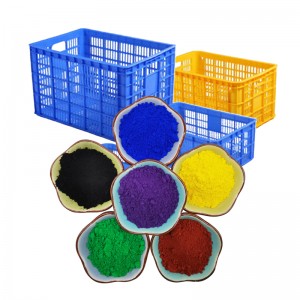
Core properties of iron oxide pigments make them irreplaceable across industries. Color stability ensures long-lasting hue retention: they resist fading caused by sunlight, rain, and temperature changes, maintaining consistent appearance in outdoor and indoor environments. Weather resistance allows use in harsh conditions: applied to exterior building surfaces, they withstand extreme heat, cold, and moisture without degradation. Chemical inertness ensures compatibility with concrete, coatings, and plastics, avoiding reactions that alter color or material performance. Non-toxic nature makes them suitable for interior spaces, as they release no volatile organic compounds. Wide color range—from red and yellow to black and brown—meets diverse coloring needs in construction and industrial sectors.
Iron oxide pigments excel in diverse application scenarios. Green construction leverages their weather resistance and color stability: added to concrete, they stain pavements, wall panels, and landscape elements, eliminating need for decorative tiles and reducing material waste. Architectural coatings use them to color exterior and interior paints: exterior paints with iron oxide pigments retain color for years, reducing repainting frequency; interior paints offer warm, natural hues that complement modern and traditional design styles. Industrial coloring applies them to plastics and ceramics: mixed into plastic pipes and containers, they provide UV protection and color coding; added to ceramic tiles, they create earthy tones for floors and walls. Concrete staining is a key application: iron oxide pigments penetrate concrete surfaces, creating permanent color that resists peeling and wear, ideal for commercial plazas and residential driveways.
Quality control of iron oxide pigments is tailored to specific applications. For architectural coatings, color fastness tests expose pigments to simulated sunlight and rain for extended periods to verify fading resistance. For concrete staining, penetration depth tests ensure color permanence, and compatibility tests check adhesion to concrete substrates. For industrial plastics, heat stability tests confirm color retention at processing temperatures. For interior decoration, volatile organic compound tests ensure non-toxicity. Both natural and synthetic pigments undergo particle size analysis to ensure uniform dispersion, preventing color streaks. Recycled pigment residues undergo purification tests to remove impurities, followed by performance tests to match virgin pigment standards.
In conclusion, iron oxide pigments stand as cornerstone eco-friendly coloring materials aligning with sustainable living and circular economy. Their natural or waste-derived origin and eco-friendly production preserve core traits of color stability and weather resistance—traits driving value in green construction, architectural coatings, industrial coloring, and interior decoration. Unlike toxic synthetic pigments that harm ecosystems, iron oxide pigments’ lifecycle minimizes environmental impact from extraction/production to waste reuse. Diverse applications demonstrate versatility: enhancing building durability with weather-resistant finishes, creating healthy indoor environments with non-toxic hues, and enabling sustainable industrial coloring. As demand for eco-friendly, long-lasting pigments grows, iron oxide pigments will remain vital choice, connecting natural resources and industrial needs in sustainable ways.